
WordPress website development that earns its keep
Anyone can install WordPress. Keeping it fast, keeping it secure and keeping it in your name is where most small businesses come unstuck. Our WordPress website development covers the build and the years afterwards.
Fixed price before we start · Everything in your name · Cancel any time

Three WordPress website development jobs,
three very different builds
A site that brings in leads, a store that takes orders, and rescuing something somebody else built are three different WordPress website development jobs. Tell us which you are and we will price that, not a package.

A site your own team can update
WordPress website development done so somebody in your office can change a price, add a service or swap a photo without opening a support ticket. We train whoever will actually do it.
- A page for every service you sell
- Editable by your team, not just us
- Built to be found in search
- Fast on a phone and on cell data

A store that keeps its own margin
WooCommerce on hosting you control, so no platform takes a cut of every order. Tax, shipping and payments are configured during WordPress website development, not left for you to figure out.
- No per-sale platform fee, ever
- Sales tax and shipping rules set up
- Card, Apple Pay, Google Pay, Klarna
- Wholesale and retail price lists

Taking over a site somebody else built
Locked out, running slow, or tied to a developer who stopped answering. Rescue is the least glamorous kind of WordPress website development: we work out how the site was put together, fix what is broken, and put it back in your name.
- Domain and hosting moved to you
- Rebuilt without losing rankings
- Speed and security brought up to date
- Written handover with every login
Five things that go wrong
with WordPress website development
WordPress is the right call for most small businesses. It is also the platform people complain about most, and the complaints are always the same five. Here they are, and here is what we do so they do not land on you.
An update breaks the checkout
A plugin updates itself overnight and the payment step stops working. The site looks fine. Orders just quietly stop arriving, and you hear about it from a customer.
Your site gets a staging copy. Every update goes there, gets checked including a test order, and only then goes live. There is a restore point in place before anything changes.
The site gets slower every year
Another plugin here, a bigger image there. Two years on it takes six seconds to load on a phone and the enquiries have thinned out without anyone noticing.
We hold the site to Google’s Core Web Vitals thresholds. Images are compressed on upload, and we keep the plugin count deliberately low rather than adding one for every small job.
Plugin licences quietly stack up
Payments, bookings, forms, backups. Each renews on a different date on somebody’s card, and after two years nobody can say what half of them are even for.
You get a single sheet with every licence, what it does, what it costs and when it renews. Bought on your account, not ours. Anything not earning its keep gets removed.
It gets hacked, and the backup is on the same server
An out-of-date plugin lets somebody in. The backups sat on the same hosting account, so they are gone too, and nobody had ever tried restoring one.
Daily backups stored somewhere separate from your hosting and kept for thirty days. We restore one onto the staging copy every month, so we know it works before you need it.
Something breaks and nobody answers
The person who built it has moved on, changed their email, or only replies when there is an invoice attached. Meanwhile your store is down over a weekend.
You get a direct number and the name of whoever looks after your site. Care plan customers get a response inside one working hour, and we tell you honestly when something is not urgent.
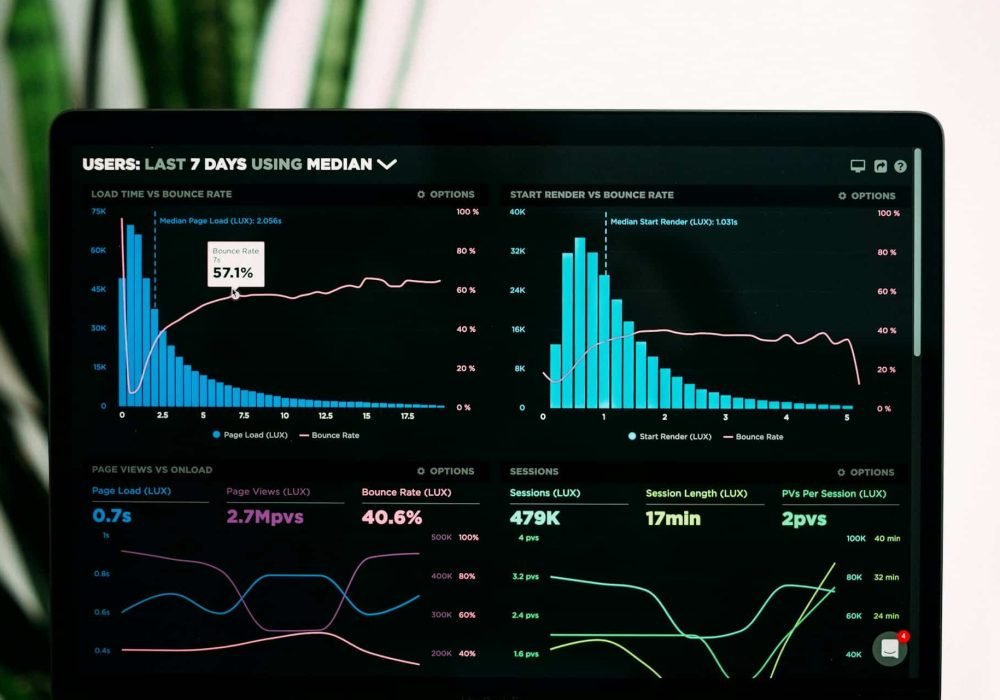
Slow sites lose the sale before the page finishes loading
Google research found that as load time goes from one second to ten, the chance of a mobile visitor leaving rises by 123%. We build to the three thresholds Google actually measures, and we keep measuring after launch.
Thresholds from Google Core Web Vitals, measured at the 75th percentile of real page loads. Every WordPress website development project we run is built to clear them, and the market-share figure above comes from W3Techs.
The unglamorous parts, set up before you launch
Tax, shipping and payments are configured separately in WooCommerce, and getting them wrong is how you end up eating shipping costs or under-collecting tax. WordPress website development includes this part, handed over documented.
Collected correctly, state by state
- Automated sales tax by destination
- Nexus thresholds handled as you grow
- Tax-exempt wholesale customers
- VAT added if you sell into Europe
Rates that do not eat the margin
- Live USPS, UPS and FedEx rates
- Flat-rate and free-shipping thresholds
- Zones for domestic and international
- Local pickup if you have a location
The ways people expect to pay
- Card, Apple Pay and Google Pay
- Klarna, Afterpay or Shop Pay
- ACH or invoicing for wholesale accounts
- Stripe, PayPal or your existing processor
Running it without a developer
- Stock counts with low-stock alerts
- Wholesale and retail price lists
- Customer accounts and reorder history
- Orders exported to your accounting software
of online carts are abandoned before checkout
The average across 50 separate studies, collected by Baymard Institute. Almost every reason shoppers give is something fixable in the checkout itself, which is where WordPress website development earns its money.
Shipping shown on the product page and in the cart, not sprung at the last step. A free-shipping threshold if your margins allow one.
Valid SSL, recognised payment marks, and Apple Pay or Google Pay so most people never type a card number at all.
Guest checkout on by default. An account is offered afterwards, once the order is already placed.
One page, the fewest fields that still get the package delivered, and address autocomplete.
Checkout re-tested on a staging copy after every update, and monitoring that tells us it is down before a customer does.
What is yours after WordPress website development,
and what we look after
You can leave whenever you like and take the whole site with you. A care plan after WordPress website development is a separate decision and you can stop that too. Neither is a contract you have to escape from.
Everything with your name on it
- The domain registered to your business
- The hosting account in your name, not ours
- Full WordPress administrator access
- Every plugin licence bought on your account
- A database and file export whenever you ask
- Analytics and Search Console owned by you

What a care plan actually covers
- Updates tested on a staging copy first
- Daily backups kept off your server
- A restore tested every month
- Uptime monitoring that alerts us, not you
- A named contact and a direct number
- A short plain-English note each month
WordPress website development pricing,
on the page and not behind a sales call
Most agencies make you sit through a call before anyone will say a figure. These are the ranges WordPress website development jobs of this size land in. You get a fixed price in writing before anything starts, never an hourly meter.
A WordPress website development project for a service business. No store, but built to be found and to turn visits into enquiries.
- Up to 10 pages, written for you
- A page per service you sell
- Contact and quote request forms
- Search set up properly
- Training for whoever edits it
- 30 days of fixes after launch
A first real store, roughly up to fifty products. The usual WordPress website development choice for a business already selling that wants to sell online too.
- Everything in the first tier
- WooCommerce on hosting you own
- Sales tax and shipping configured
- Card, Apple Pay and Google Pay
- Stock counts and low-stock alerts
- 90 days of support after launch
Hundreds of products, wholesale accounts, or connecting the store to software you already run — the largest WordPress website development jobs we take.
- Wholesale and retail price lists
- Customer accounts and portals
- Links to your accounting software
- Migration from another platform
- Rescues from another developer
- Phased so you see it as it lands
Indicative ranges only. Your fixed price is agreed in writing before any WordPress website development starts.
Running costs are separate and go to the supplier, not to us. WooCommerce itself is free with no platform fee; its own guidance puts hosting at $25 to $350 a month depending on store size, and paid extensions at $29 to $299 a year each. A care plan after WordPress website development is optional on top.
WordPress website development questions
people search before they commit
For a small business store, most projects land between $3,500 and $7,500. A simple starter store with a handful of products can be less; hundreds of products, wholesale accounts or a link to your accounting software pushes it past $9,000. On top of the build, budget for hosting and any paid extensions. WooCommerce puts hosting at $25 to $350 a month depending on store size and extensions at $29 to $299 a year each. We give you one fixed figure in writing before anything starts.
The plugin is free, there is no monthly platform fee, and no cut of your sales. What costs money is everything around it: hosting, your payment processor’s transaction fees, and any paid extensions for things like bookings, subscriptions or advanced shipping. Those renew yearly. Once you are selling regularly it works out cheaper than a hosted platform that charges per sale, but it is not free to run, and anyone telling you otherwise is selling you something.
If your main job is being found in search for services you provide, WordPress wins. It is better at content, better at local search, and you own it outright. If you are purely selling physical products, want somebody else handling hosting and security, and you are happy paying monthly plus a slice of each sale, Shopify is less work. The usual tipping point: a service business that also sells a few products is better off on WordPress with WooCommerce. We will tell you honestly if Shopify suits you better, even though we do not sell it.
It can, and it is the single most common WordPress complaint. An update to one plugin can break something else, and the checkout is often what goes. That is why we never update a live site directly. Your site gets a staging copy, updates go there first, we run a test order, and only then do they go live — with a restore point in place before anything changes.
Yes, and it is a good chunk of what we do. The first job is finding out what actually exists: where it is hosted, whose name the domain is in, which plugin licences belong to whom. Sometimes we can adopt the site as it stands and just take over looking after it. Sometimes rebuilding is cheaper than untangling it. We will tell you which, and why, before you spend anything.
Send us the site you already have
Or tell us what you want to sell. We will look at what you have, say whether it needs rebuilding or just looking after, and give you a fixed WordPress website development price either way. Thirty minutes, no charge, no obligation.
We will tell you if the site you have is fine and you do not need us.