
Most businesses do not need mobile app development. Some really do.
Mobile app development earns its place when someone opens the app every week because their job depends on it. If you are hoping customers will download it to stay in touch, a better mobile site will do more for a tenth of the cost. We will tell you which one you are before you spend anything.
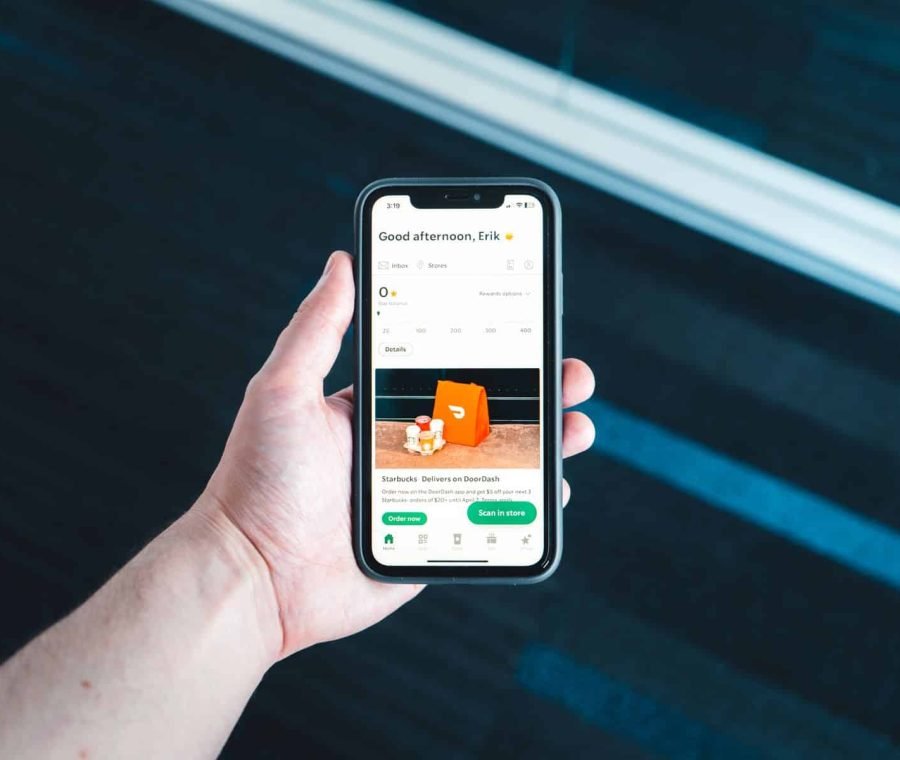
Do you need mobile app development,
or a better mobile site?
Apple settles a lot of this for you. Their review guideline 4.2 says an app must be more than a repackaged website, and that apps which are “primarily marketing materials, advertisements, web clippings, content aggregators, or a collection of links” do not belong on the App Store. A menu, your hours and a contact form is a web clipping. It will be rejected, and it should be.
Look up a menu, hours, prices or availability
Perfect. Instant, no install, shows up in search
Overkill, and Apple may reject it
Book, order or request a quote
Works well with a good checkout
Only worth it if they order weekly
Staff capturing work on site, often offline
Falls over the moment signal drops
This is what apps are for
Barcode scanning, background location, Bluetooth hardware
Unreliable or unavailable in a browser
Full access to the device
Push notifications as the core of the product
Possible, but only if they add it to the home screen
Straightforward and reliable
A captive audience you can require to use it
No install to enforce
Sensible — you are not fighting for downloads
Guideline reference: Apple App Store Review Guidelines 4.2 and 4.2.2 — the rules every mobile app development project is judged against. Web push on iOS works only for sites the user has added to their home screen (WebKit, 2023).
of installed apps are deleted within thirty days
AppsFlyer tracked 402 million uninstalls across 2,200 apps. Most of them happen on day one. This is not a reason never to build an app — it is the reason to build one people are already asking for rather than one you hope they will discover.
Median retention across all app categories and both platforms, per Adjust. Uninstall figure from the AppsFlyer App Uninstall Report, 2025 edition, covering January 2023 to November 2024. Both are worth reading before you commission mobile app development.
Mobile app development for apps
people open because they have to
Every one of these mobile app development jobs has a captive user — a member of staff, a trade account, a member who already pays you. None of them depend on winning downloads from strangers.
Field and service apps
Job sheets, photos, signatures and parts used, captured on site and synced when the signal comes back. Replaces the paper pad in the van.
Warehouse and stock apps
Barcode scanning on a phone instead of a rented handheld. Stock counts, picking, goods in, all writing straight to your system.
Reordering for trade accounts
Your regulars reorder in thirty seconds from their own price list. The app exists because they order every week, not because you marketed it.
Membership and check-in
Gyms, clubs and studios. Booking, check-in, class schedules and the card people would otherwise lose.
Alerting and approvals
Something happens in your system and the right person gets a push notification and approves it from their phone in ten seconds.
Companion apps for kit you sell
Bluetooth or wifi hardware that needs an app to set up, monitor or control it. The one case where native is usually the honest answer.
Mobile app development in one codebase or two?
Mobile app development for iPhone and Android separately means two codebases to pay for forever, not just twice at the start. For almost every business on this page, one shared codebase is the right answer — and the companies with the most to lose agree.
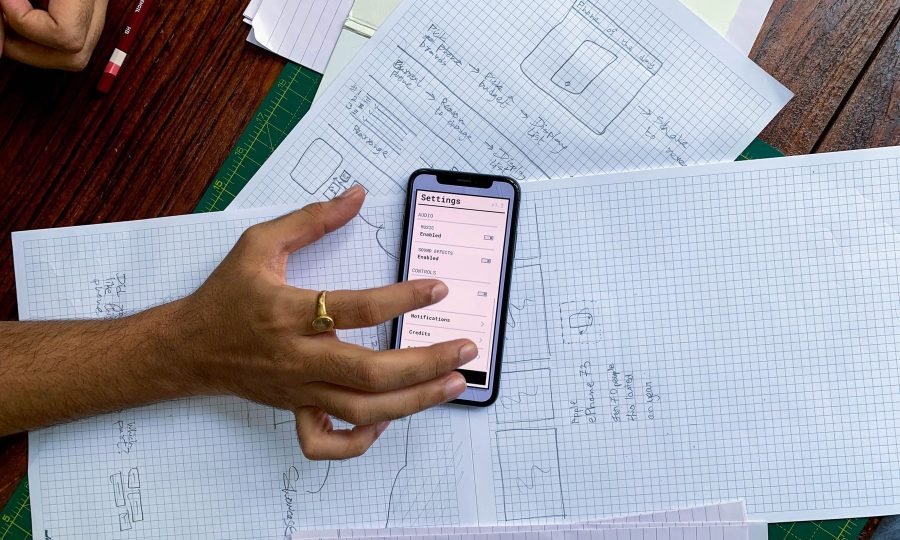
React Native or Flutter
Shopify migrated all of its apps to React Native and published the results after five years: screens loading in under half a second at the 75th percentile, and better than 99.9% of sessions crash-free. Coinbase went from three app platforms to two and ended up with 113 people able to contribute to the mobile codebase instead of roughly 25.
- One team, one codebase, both stores
- A fix ships to iPhone and Android together
- Far cheaper to maintain year on year
- More people in your business can touch it
Swift and Kotlin, written natively
Worth the extra cost when the app is the product and it lives or dies on hardware access or interface smoothness. Airbnb famously moved off React Native in 2018 — though even then, 63% of their engineers said they would choose it again.
- Heavy Bluetooth or sensor work
- Games and high-frame-rate interfaces
- Platform features on day one of release
- Only if the extra spend is justified
Getting your mobile app development into the stores,
and keeping it there
Apple reviewed 7.8 million submissions in 2024 and rejected 1.9 million of them — about one in four. Mobile app development here includes handling that end, building to the rules rather than discovering them at submission.
Every year, forever. Organisations also need a D-U-N-S number, which takes time to obtain.
One-off. But new personal accounts must run a closed test with twelve testers opted in for fourteen straight days before any mobile app development can be published at all.
Apple says 90% of submissions are reviewed in under a day. Google can take up to seven days for a new account.
Over 40% of unresolved issues come down to one guideline: crashes, broken links, placeholder text, or a demo login that does not work.
Both platforms force a rebuild roughly once a year whether or not you changed anything. Apple requires builds made with the current SDK. Google requires apps to target a recent Android version or they stop appearing for anyone on a newer phone. This is why maintenance is not optional.
Figures from Apple’s 2024 App Store Transparency Report, Apple Developer Program membership pages, Apple App Review guidance and Google Play Console documentation.
The accounts go in your name. Including the one that matters most.
Apps have a specific trap that websites do not. Every app is signed with a key, and only builds signed with that same key can update it. Lose control of the signing key and nobody — not you, not us, not Apple — can ever push an update to the app your customers already installed. You would have to publish a new one and start the install count from zero.
So the mobile app development accounts are opened in your company name, on your card, with you as the account holder. We get added as a developer. Not the other way round.
- The Apple Developer account, held by your company
- The Google Play Console account, held by your company
- The signing keys, backed up somewhere you control
- The source code, in your repository from day one
- The store listing, screenshots and description
- Analytics and crash reporting, in your accounts
Ask anyone quoting you for mobile app development whose name the developer account will be in. If the answer is theirs, your app lives inside their business.
What mobile app development costs to build,
and then every year after it
There is no authoritative survey of app pricing — every guide you find is an agency quoting its own rate card. The most useful independent number is from Clutch, which averages actual reviewed engagements: $90,780 over about eleven months. We work deliberately smaller than that.
A single clear job for a known audience. Job sheets, stock counts, reordering, check-in. This is the smallest mobile app development we take on, live in about two to three months.
- One shared codebase, iPhone and Android
- Login and one core workflow
- Works offline where it needs to
- Both store submissions handled
- Fixed price before we start
The app has to talk to what you already run — your ERP, your booking system, your accounts package. In this kind of mobile app development, most of the work is in the joins.
- Everything in the first tier
- Integrations with your existing systems
- Push notifications and alerting
- Roles and permissions
- Admin side for your office team
Not optional, and here is the honest reason: Apple and Google each force a mobile app development rebuild about once a year, on their schedule and not yours.
- Apple account $99 a year, forever
- Google Play $25, one off
- Annual SDK and target rebuilds
- Crash monitoring and fixes
- OS releases tested twice a year
Placeholder ranges — replace with your real numbers before launch.
Benchmarks: Clutch reviewed-engagement data for mobile app development (average $90,780, about 11 months). Maintenance range from MobiLoud and Topflight. Store fees direct from Apple and Google.
Mobile app development questions
people search before they commit
Nobody in this industry will give you a straight answer, so here is one. The independent figure worth trusting is from Clutch, which averages real reviewed engagements: $90,780 over about eleven months. That is skewed by big projects. A focused app doing one job well, built on a single shared codebase, is more like $20,000 to $45,000. Add integrations with your existing systems and it runs $45,000 to $90,000. Then budget 15% to 25% of that per year to keep it alive.
Most businesses need the website. Apple’s own review guideline 4.2 says an app must be more than a repackaged website and that apps which are mainly marketing material, web clippings or a collection of links do not belong on the App Store — so a menu-and-hours app will likely be rejected. Build an app when someone opens it weekly because their job depends on it, when it needs hardware the browser cannot reach, or when it works offline. Otherwise you are paying app prices to build a worse version of a web page.
A hard floor of $99 a year to Apple, forever, plus $25 once to Google. On top of that, budget 15% to 25% of the build cost annually. The reason is not padding: Apple requires new submissions to be built with the current SDK, and Google requires apps to target a recent Android version or they stop appearing for anyone on a newer phone. Both platforms force a rebuild roughly once a year whether or not you changed anything.
For nearly every business, one shared codebase. Shopify moved all of its apps to React Native and published the five-year results: under half a second to load a screen at the 75th percentile, and better than 99.9% of sessions crash-free. Coinbase went from three app platforms to two and ended up with 113 people able to work on the mobile code instead of about 25. Native Swift and Kotlin earn their extra cost when the app is the product and depends on heavy hardware access or very high frame rates.
Be realistic. AppsFlyer tracked 402 million uninstalls and found 46% of installed apps are deleted within thirty days, most on day one. Median retention across all categories is about 26% on day one, 13% by day seven and 7% by day thirty. That is why we steer clients towards apps with a captive audience — your staff, your trade accounts, your members — rather than apps that need to win downloads from strangers.
Tell us who would open it, and how often
That one answer decides almost everything about the mobile app development — whether you need an app at all, what it should cost, and how long it takes. Thirty minutes, no charge, and we are happy to tell you a better mobile site would do the job for a fraction of the money.
We will talk you out of an app if that is the honest answer.