
Custom software development, built around how your business actually works
When the spreadsheet has outgrown itself and the off-the-shelf system almost fits, you are paying for the gap in staff hours. Custom software development closes that gap — and we will tell you first if you would be better off buying something.

Nobody sets out to buy software. They run out of workarounds.
Almost every custom software development project we take on starts the same way. It starts as one spreadsheet. Then a second one somebody keeps privately. Then a rule only one person knows. By the time you are looking at this page, the workaround costs more than the fix would.
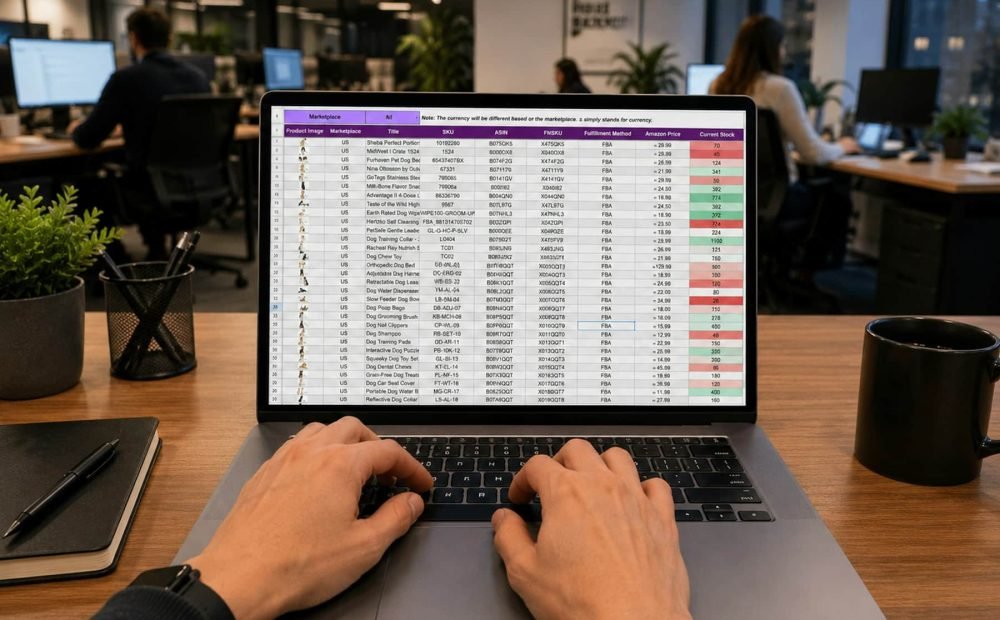
A quarter of the week goes on re-keying
More than 40% of workers spend at least a quarter of their working week on manual, repetitive tasks. Around 60% reckon they could get six hours a week back.
The spreadsheets have errors in them
A field audit of 25 real operational spreadsheets found errors in 16 of them. Seven of those errors were worth more than $10 million. Nobody had noticed.
Too many systems, none of them talking
The average company now runs 101 separate applications. The gaps between them are where your staff are doing the work by hand.
You are paying for software nobody opens
Only 54% of purchased software licences actually get used. Buying another subscription is often how the last problem got solved.
Sources for the figures above: Smartsheet, Automation in the Workplace (2017); Powell, Baker & Lawson, Tuck School of Business (2009); Okta, Businesses at Work (2025); Zylo, SaaS Management Index (2026). We cite them so you can check the numbers rather than take our word for it. If you would rather talk it through, our FAQ answers the cost and timeline questions most people ask before a custom software development project starts.
Custom software development is the wrong answer
more often than agencies admit
There are three honest outcomes to a custom software development conversation, and only one of them involves us writing code. We would rather tell you which one you are in now than take a deposit and find out later.
Buy it off the shelf
If the job is something thousands of businesses do the same way, somebody already sells it, and it will be better than anything custom software development could buy you for the money.
- Payroll, accounting, email, basic CRM
- A package covers 80% and the last 20% does not matter
- You are the first company to want this? You are probably not
- If you are planning a six-figure customisation of a subscription product, you are about to pay custom prices for software you will not own
Change the process instead
Sometimes the software is fine and the process around it is the problem. Bending the tool to fit a habit is how a custom software development project runs for seven years and gets cancelled.
- The workaround exists because of one person’s preference
- Two teams do the same job two different ways
- The report nobody reads is driving the whole workflow
- Fixing this costs a meeting, not a budget
Build something custom
Custom software development is worth it when the process is genuinely how you compete, or when the manual work has a number attached to it that is bigger than the build.
- No package fits without heavy compromise
- The workaround is costing measurable staff hours
- It has to connect systems that will not talk
- You will still be doing this in five years
- You can fund years two and three, not just the build
Six custom software development builds
that pay for themselves
Almost every custom software development job we take on is one of these six. If yours is not, say so on the call and we will tell you honestly whether it is in our lane.
Internal operations tools
The system your team lives in all day. Jobs, orders, stock, scheduling, approvals — whatever the spreadsheet is currently pretending to do.
Customer and supplier portals
A login where the people outside your business can see their own orders, invoices, documents and progress instead of calling to ask.
Integrations between systems you already pay for
Making the quoting tool talk to the accounting package, and both of them talk to the website. Usually the cheapest project on this list and the highest return.
Field and mobile apps
Something that works in a van, a warehouse or a site office. Barcode scanning, photo capture, signatures, and offline when the signal drops.
Quoting and pricing engines
Your pricing rules, discounts, margins and options encoded once, so a quote takes two minutes and comes out right every time.
Reporting that matches how you think
One place where the numbers agree with each other, pulled from the systems that hold them, without anybody exporting to a spreadsheet first.
THE ONE WE RECOMMEND FIRST
Integrations, nearly always. They are cheaper, they finish faster, and they remove the manual step everyone hates. If that solves it, you have saved yourself a build.
Work out what the manual version already costs you
Do this before you talk to any custom software development firm, us included. If the answer is smaller than the build, do not build it. If it is several times larger, the risk is in waiting.
Hours a week × people doing it × what an hour of their time costs you × 52.
Four people in the office re-keying orders between the website, the quoting sheet and the accounts package.
Against a custom software development build in the $40,000 to $70,000 range, that pays back inside about eighteen months and keeps paying afterwards. Put your own numbers in — if it does not clear the bar, we will say so.
We scope and price custom software development
before you commit to building it
The Project Management Institute found that 47% of failed projects failed on requirements, not on code. So the first thing we sell is not a build. It is two to four weeks of working out exactly what the custom software development will do, and what it will cost.
- A written spec of exactly what gets built
- Screens you can look at before anything is coded
- A fixed price and a delivery date
- A phase plan, smallest useful piece first
- The lot in your hands, yours to keep
And if you walk away, you keep it. Take the specification to another custom software development firm and get it quoted. We would rather lose the build than talk you into one that was never scoped.
Standish Group CHAOS data, 2015. It is the clearest argument there is for shipping something small that works, then extending it — instead of disappearing for a year.

You own the code. In writing, from the first commit.
This catches people out, so it is worth being specific. Under US copyright law, software is not one of the nine categories that can be a “work made for hire” when a contractor writes it. A contract that only uses that phrase can transfer nothing at all — leaving the developer holding the copyright and you with a licence they could give to somebody else too.
What you need is a written assignment, signed before work starts. That is what our contract does. Here is what that means day to day.
- The repository lives in your organisation account from commit one
- Servers, domains and API keys are in accounts you control
- A README another developer can build and deploy from
- Documentation written for whoever comes next, not for us
- No licence fee, no per-seat charge, no permission needed to change it
- Walk away whenever you like and take all of it
The test worth applying to anyone you hire: can you build and deploy the software without the original developer’s laptop? If the honest answer is no, you do not own it yet.
US Copyright Office Circular 30 and 17 U.S.C. §204(a). Outside the US the mechanism differs — the written assignment is what matters either way.
Custom software development pricing:
three commitments, and you can stop after any
Nobody signs a six-figure number on day one. Custom software development here is bought in three parts: you buy the scoping, and only then decide whether to buy the build.
The only thing you commit to at the start. We sit with the people who do the work, map what actually happens, and write down what gets built.
- A written spec and screens to look at
- A fixed price for the build
- Yours to keep, even if you stop here
The smallest version that is genuinely useful, in the hands of the people who need it. Not a demo — something they use on Monday.
- Built in two-week blocks you can see
- Tested with your team before it goes live
- Code in your repository throughout
- Fixed price, agreed before we start
The part nobody warns you about. Three separate industry sources put ongoing custom software development maintenance in this range, and it is real work: security patches, dependency updates, and the changes your business asks for once people are using it.
- Hosting, monitoring and backups
- Security patching and dependency updates
- Changes as the business changes
- Optional — you can take it in-house
Indicative ranges only. Your fixed price is agreed at scoping, before any build begins.
Benchmarks: Clutch pricing data, August 2026 (average custom project $132,480 over about 13 months). Maintenance range from Keyhole Software, CodeStringers and Space-O, which independently arrive at 15–25% of build cost a year.
Custom software development questions
people ask before they commit
Independent data from Clutch puts the average custom software project at $132,480 over roughly thirteen months. That average is dragged up by large jobs. Most small business work we take on starts with $2,500 to $9,000 of scoping, then a first working phase somewhere between $18,000 and $60,000. Then budget 15% to 25% of the build cost a year to keep it running. If your problem does not justify those numbers, we will tell you at the scoping stage rather than after.
You should, but it is not automatic. Under US copyright law, software is not one of the nine categories that can be a “work made for hire” when a contractor writes it, so a contract using only that phrase may transfer nothing — the developer keeps the copyright and you get a licence they could also grant to somebody else. What you need is a written assignment signed before work begins. Ours is. And ask any developer the practical version: can you build and deploy the software without their laptop?
Scoping is two to four weeks. A first working phase is usually two to four months depending on how much has to connect to other systems. We deliberately build in two-week blocks you can see, because the data is unambiguous on this — Standish Group found small software projects succeed 61% of the time while very large ones succeed 6% of the time. Anyone quoting you a single twelve-month delivery date is quoting you the risky version.
Ask whether this process is part of how you compete or just something every business in your industry does the same way. If it is a commodity — payroll, accounting, basic CRM — buy the package and change your process to suit it. Build when no package fits without heavy compromise, when the manual workaround has a real cost attached, or when it has to join up systems that will not talk. The clearest warning sign: if you are planning a six-figure customisation of a subscription product, you are already paying custom prices for software you will never own.
The repository is in your account from the first commit, the servers and API keys are in your name, and the documentation is written so another developer can pick it up. That is the whole point of setting it up that way — not because we plan to vanish, but because you should never be in a position where one supplier can hold the work hostage. We also take on rescues of projects other people abandoned, so we have seen what the alternative looks like.
Describe the workaround. We will tell you if it is worth fixing.
Thirty minutes with the person who would actually scope the custom software development. Bring the spreadsheet, the process, or just the problem — you do not need a specification to start.
No obligation, and we will happily talk you out of a custom software development project you do not need.