
Google Business Profile management — relevance, distance and prominence, worked properly
Google publishes the three factors that decide local ranking. Two of them you can influence and one you cannot. Everything we do sits inside that, and we will tell you which is which.
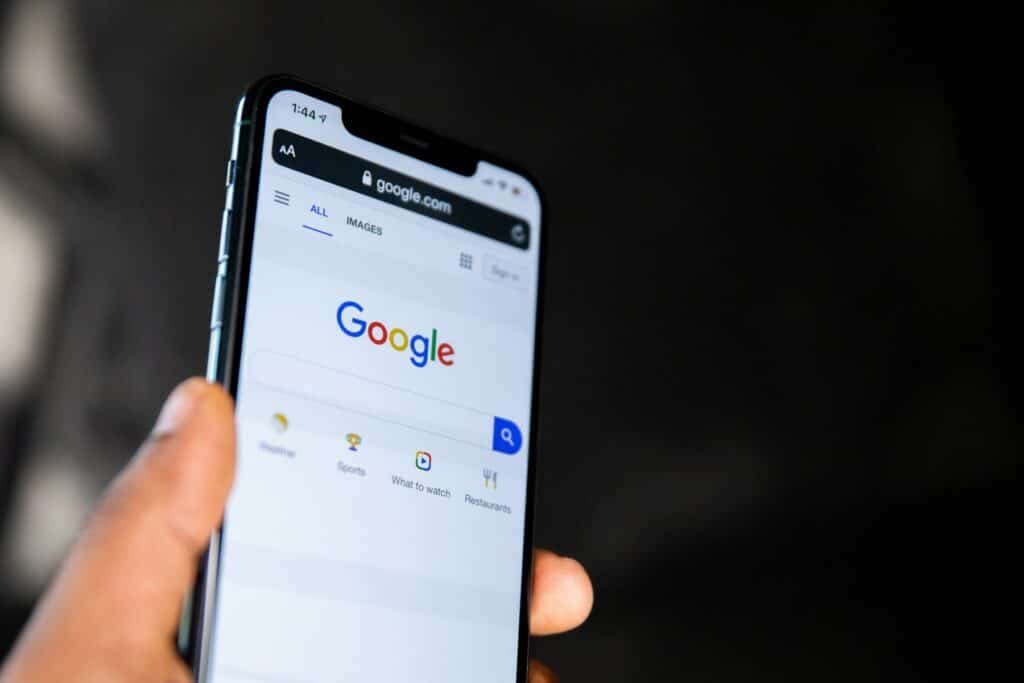
For most local service businesses, the Google Business Profile is where the demand actually lands. Someone searches, a map pack appears, and three businesses get the call. This page sets out what Google itself says decides that order, what is genuinely within your control, what it costs, and which widely quoted local SEO statistics we refuse to repeat because we could not find a source for them.
What does Google say decides local ranking?
Google publishes this in its own words in the Business Profile help documentation. We are quoting rather than paraphrasing, because most of what gets sold as local SEO strategy is a paraphrase of a paraphrase.
“How well a Business Profile matches what someone is searching for.”
“How far each potential search result is from the location term used in a search.”
“How well-known a business is.”
“There’s no way to request or pay for a better local ranking on Google.”
Google Business Profile Help, “Improve your local ranking on Google”. Accessed 16 September 2026.
Distance is the one you cannot work around. If your registered address is thirty miles from the searcher, nothing makes you the nearest result to them. That single fact disposes of most of what gets sold as local SEO, and it is why the honest version of this service concentrates on relevance and prominence — and on being unambiguously correct about where you actually are.
How much does simply completing the profile matter?
More than most owners expect, and it is measurable. Whitespark analysed 1.8 million business profiles across 4,209 categories and found that profiles scoring zero out of five on completeness appeared in the top ten for 4% of the queries examined, while profiles scoring five out of five appeared for 13%. Profiles with a specific primary category appeared for 12.5% against 9.2% for generic ones.
Those are third-party correlation figures, not Google’s, and correlation is not a mechanism — well-run businesses tend to both complete their profile and be well-known. But it lines up with what Google does say, which is qualitative rather than numeric: “Businesses with complete and accurate info are more likely to show up in local search results.” Complete the profile. It is the cheapest work in local search and it is still the most commonly skipped.
How much do reviews really matter?
Google is unusually direct on this: “More reviews and positive ratings can help your business’s local ranking.” What consumers then do with those reviews is measured separately, by industry surveys rather than by Google.
97%
74%
32%
BrightLocal Local Consumer Review Survey 2026, n = 1,002 US adults, published 11 February 2026. An industry survey, not Google data.
Recency is the part most businesses get wrong. Forty five-star reviews from 2023 read as a business that used to be good. The practical implication is a steady trickle rather than a campaign: a handful each month, asked for consistently, beats fifty collected in one push followed by silence.
What we will not do is incentivise them. Google’s policy treats incentivised reviews as fake and misleading content and prohibits them, and reviews from employees or contractors are removable as conflicts of interest. Anyone offering to get you reviews quickly is offering to put your profile at risk.
How far can your service area actually stretch?
Further than one town, and nothing like as far as most profiles claim.
Google’s guidelines are specific: “The boundaries of your profile’s overall service area shouldn’t extend farther than about 2 hours of driving time from where your business is based.” Profiles claiming an entire state are not being clever; they are outside the guidelines and diluting the relevance signal they already had.
The same discipline applies to categories. Google’s instruction is to “use as few categories as possible to describe your overall core business”, and the test for adding one is whether the business IS that thing, not whether it HAS that thing. A roofing company that also clears gutters is a roofing contractor. It is not also a gutter cleaning service, a construction company and a home improvement contractor. Every extra category makes the profile slightly less clear about what it is.
What actually moves prominence?
The one factor with no switch to flip.
Prominence is Google’s word for how well-known a business is, and it is assembled mostly from things outside the profile: links, articles, directories, and how consistently your name, address and phone number appear wherever they are listed. There is no setting for it and there is nothing to buy.
What we can do is remove friction. Correct the citations still showing a 2019 address. Get the business listed where its trade is actually listed. Keep the profile posting so it reads as active rather than abandoned. None of that is dramatic and all of it is cumulative, which is why we report it monthly instead of promising a result by a date neither of us controls.
What Google Business Profile management actually covers
Six things. The third is the one that most often gets done in a way that breaches Google’s policy.
Full profile completion
Every field Google offers, filled in accurately: services, attributes, hours including holidays, description, opening date and contact routes. The cheapest work in local search.
Category and service area discipline
One primary category chosen against the IS-a test, secondary categories kept to the minimum, and a service area inside Google’s two-hour driving guidance.
A review routine that is actually allowed
A request process using Google’s own review link or QR code, built into how you already close a job. No incentives, no gating, no staff reviews.
Review responses, all of them
Every review answered, including the bad ones, in a tone written for the next person deciding whether to call you rather than for the reviewer.
Citation and NAP consistency
Name, address and phone checked and corrected everywhere they appear, because contradictory listings undermine the one signal you fully control.
Reporting from Google’s own data
Calls, direction requests, website clicks and the searches that surfaced you, taken from the profile’s performance data rather than from our estimates.
How will you know the profile is working?
Four numbers, taken straight from the profile’s own performance report. We do not produce that data and we cannot adjust it.
Counted by Google, not by us. The closest thing to a direct enquiry number that exists in local search.
A strong signal for any business people physically visit, and a useful check on whether your service area is set correctly.
Tracked separately from organic search, so the profile is never credited with traffic the website earned on its own.
Both, not just the count. A rising count with a rising average age is a business coasting on old reviews.
Google Business Profile pricing: three commitments, published
Setup is a fixed price because its scope is fixed. Management is monthly and priced on how many locations you have, not on how the month happened to go.
30 minutes
We check your existing profile against Google’s own guidelines and tell you what is wrong with it. Quite often the answer is that it needs one afternoon, not a monthly fee.
One-off
Full completion, category and service area correction, citation cleanup, and a review request routine built into the way you already close jobs. Done once, properly.
Agreed before work starts
Posting, review responses, photo updates, performance reporting, and keeping the profile inside Google’s guidelines as they change. Priced per location.
Google Business Profile: the questions we get asked
Can you guarantee I will rank in the map pack?
No, and nobody can. Google states plainly that there is no way to request or pay for a better local ranking, and distance from the searcher alone puts a ceiling on it that no amount of work removes. What we can do is make sure relevance and prominence are not the thing holding you back.
Can you get me reviews quickly?
Not in the way that is usually meant. Google’s policy treats incentivised reviews as fake and misleading content and prohibits them, and reviews from employees or contractors are removable as conflicts of interest. What we set up is a steady, compliant request routine — which is worth more anyway, because recent reviews carry more weight with the people reading them.
How big can my service area be?
Google says the boundaries should not extend farther than about two hours of driving time from where the business is based. Claiming an entire state is outside the guidelines and dilutes the relevance signal you already have.
How many categories should I choose?
As few as describe your core business. The test is whether the business IS the thing, not whether it HAS the thing. Adding categories you only half qualify for makes the profile less clear rather than more visible.
Is the profile more important than my website?
For urgent local work the profile is usually where the enquiry starts, and the website is where the decision gets made. They are not alternatives. If you can only do one thing this month, fix the profile first, because it is faster and cheaper.
Do I still own the profile if we stop working together?
Yes. It stays on your Google account throughout and we work as a manager on it. That access is removed the day you ask, and nothing you paid for leaves with us.
Send us your profile link. We will tell you what is wrong with it before you pay anything.
Thirty minutes, no obligation. If the profile only needs one afternoon of work, we will say so rather than sell you a monthly plan you do not need.
Book a 30 minute consultation
Where this fits with the rest of your marketing
Social media management
Two platforms chosen from reach data, published on a schedule you can keep, reported in enquiries.
Technical SEO
Core Web Vitals, crawling and indexing — the work that decides whether Google can use your site at all.
Web design Houston
The site your profile sends people to. Built to turn a visit into a phone call.
Industries we build for
Roofing, HVAC, plumbing, electrical and six more trades, each with its own page.
Google Business Profile Help, “Improve your local ranking on Google”. Accessed 16 September 2026.
Google Business Profile Help, “Get more reviews”, and the Google Maps user-contributed content policy covering incentivised and conflict-of-interest reviews. Accessed 16 September 2026.
Google Business Profile Help, “Guidelines for representing your business on Google”, covering service area boundaries and category selection. Accessed 16 September 2026.
Whitespark analysis of 1.8 million business profiles across 4,209 categories, reported by Search Engine Land on 25 August 2026. A third-party correlation study, not Google data.
BrightLocal, Local Consumer Review Survey 2026, n = 1,002 US adults. Published 11 February 2026. An industry survey.
Figures we chose not to publish: “46% of Google searches have local intent” and “photos generate 42% more direction requests”. Neither has a primary source we could retrieve and check.